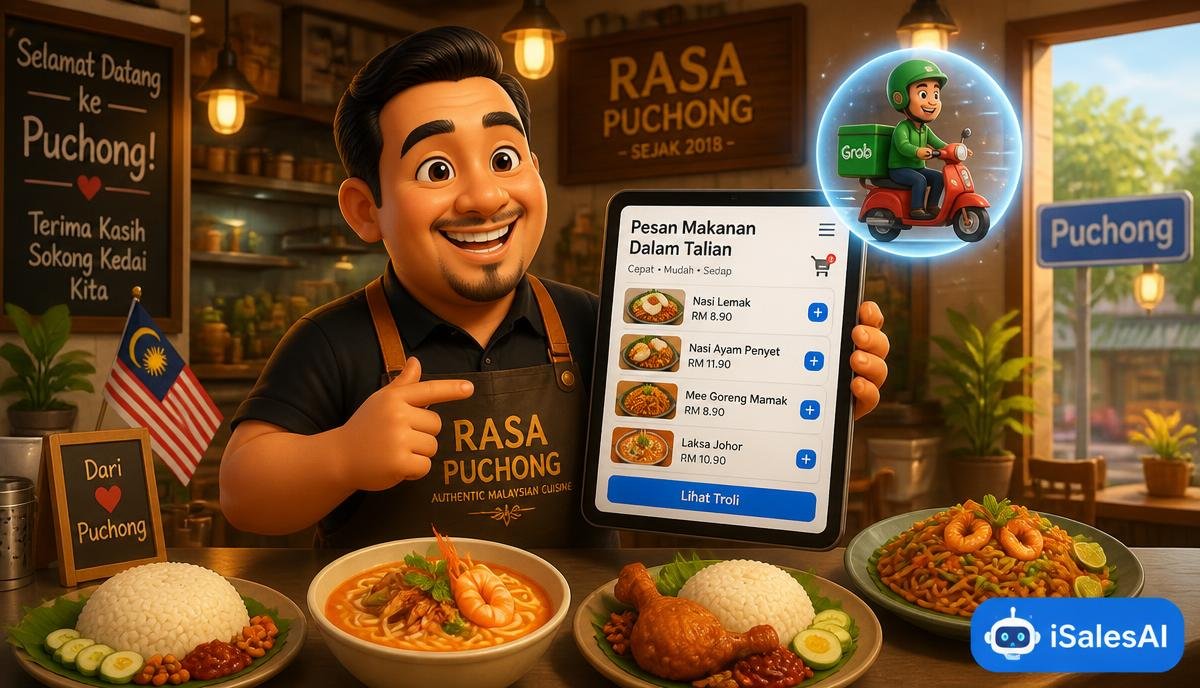
Restaurants around Bandar Puteri, IOI Mall and Puchong Jaya hand up to a third of every order to delivery apps. A direct ordering website changes the maths — here is how it is built.
The Commission Problem Nobody Budgets For
Around Bandar Puteri, IOI Mall, Puchong Jaya and Taman Perindustrian Puchong, delivery platforms brought volume — and a commission line that quietly eats the margin on every plate. Worse, the customer belongs to the platform. You cannot see who ordered twice, you cannot message them when you open a new outlet, and a competitor's promo tile sits directly above your listing.
Nobody sensible switches the apps off. The strategy that works is running a direct channel alongside them, so repeat customers — the ones who already know your food — order at full margin.
What a Direct Ordering Site Needs
- A menu that loads instantly on mobile data, with real photos and current prices. A PDF menu is the single most common reason a direct order does not happen.
- Item options handled properly — spice level, add-ons, set upgrades, no-pork or halal notes — because a wrong order costs more than the commission you saved.
- Pickup and delivery as separate flows, with a delivery radius you actually serve and a clear fee. Pickup is pure margin and is often the fastest win.
- Local payment the customer trusts — FPX, DuitNow QR, cards and e-wallets. Bank transfer with a screenshot is not a checkout.
- Orders landing where the kitchen can see them, printed or on a tablet, with a sound alert. An order sitting in an unread inbox is a one-star review.
Making the Direct Channel Cheaper for the Customer, Not You
The honest pitch is simple: the same food, slightly cheaper or with a small extra, when ordered direct. A free upgrade, free delivery above a threshold, or a loyalty stamp on the fifth order is enough. Print the direct link and QR on the takeaway packaging, receipts and table talkers — the customer already holding your food is the cheapest one to convert.
Local SEO for F&B in Puchong
Food searches are ruthlessly local and visual. Your site needs a page per outlet with exact hours, parking notes and the landmarks people actually use, plus menu structured data so dishes and prices can appear directly in search. Photos matter more than copy: current, well-lit shots of the dishes you actually sell today, not stock imagery. Reviews and a live Google profile do the rest.
WhatsApp Is the Real Reorder Channel
Most Puchong outlets already take orders on WhatsApp, chaotically. Structured properly, the website captures the order and the number, sends the confirmation on WhatsApp, and lets you send a Friday special to people who ordered before — with their consent. That list is the asset the delivery apps will never give you.
Start Small and Prove It
Launch with pickup only, your fifteen best-selling items, one payment method and one outlet. Track direct orders, average basket and repeat rate for a month against your platform statements. Almost every outlet finds the same thing: the direct channel is a minority of volume and a disproportionate share of profit. Then expand the menu and add delivery.
Our web design Puchong service builds direct ordering with local payment gateways, and can tie it into a POS system so kitchen, stock and reporting stay in one place.
Planning this for your own business? Our web design Malaysia page walks through scope, timeline and pricing.
Want a website that actually brings in leads?
We build trilingual (EN/BM/中文) business websites in 2–4 weeks, with clear scope and pricing from the start.
Or estimate your budget first with our free website cost calculator →Related articles
- Web DesignWeb Design Puchong Trends: Moving from Static WordPress Sites to High-Performance Framer & React Platforms
- Web DesignWeb Design Puchong: How Hyper-Local Digital Transformation Drives SME Growth in Bandar Puteri & IOI Rio
- AI AutomationWeb Design Puchong: How WhatsApp Automation and CRM Integration Turn Website Visitors into Loyal Customers