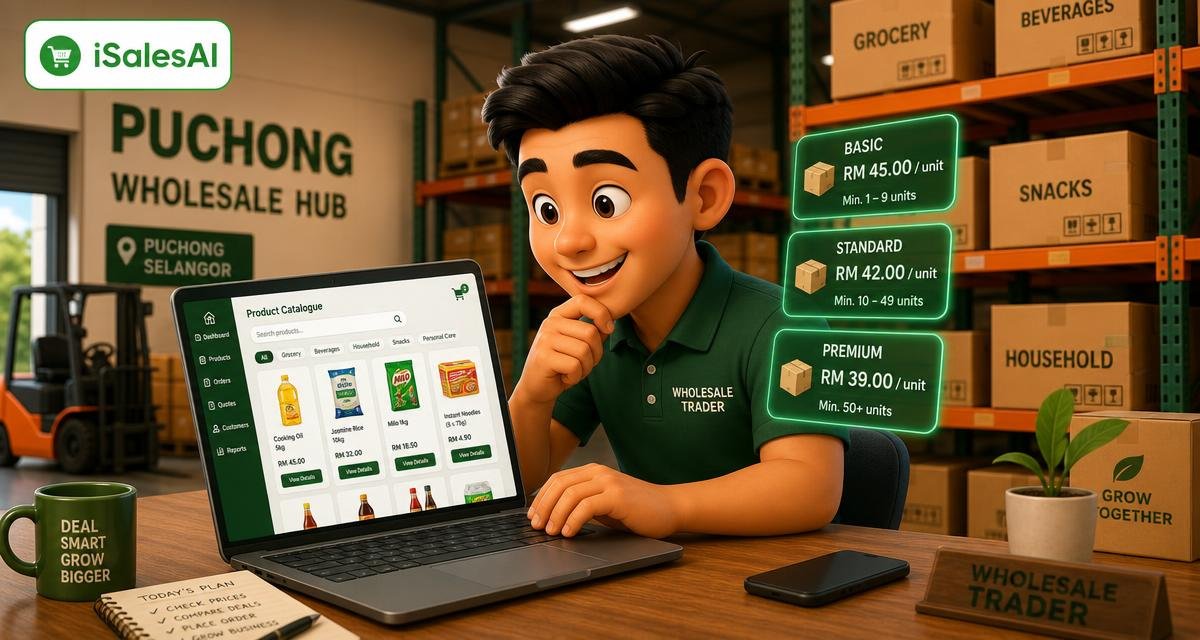
Puchong traders still send PDF price lists over WhatsApp. A searchable catalogue with dealer-only pricing tiers cuts the admin and wins the B2B searches nobody else is targeting.
The PDF Price List Problem
Walk through the trading and distribution businesses around Bandar Puteri, Taman Perindustrian Puchong and the LDP corridor and you will find the same workflow: a customer asks for the price list, someone digs out a PDF that is two revisions old, sends it on WhatsApp, then answers questions about stock and minimum order quantity one message at a time.
It works, barely. What it costs is invisible: hours of admin every week, pricing errors when an old file circulates, and total absence from every B2B search a buyer makes before they ever contact you.
What a Catalogue Portal Replaces
A properly built catalogue does four jobs the PDF cannot:
- It is searchable and filterable by category, brand, size, material and stock status, so a buyer finds the right SKU in seconds.
- It shows the right price to the right buyer — public visitors see a range or “request quote”, logged-in dealers see their contracted tier.
- It is always current, because it is fed from one product list your team already maintains.
- It is indexable, so a buyer searching a product name plus a location can land on your product page instead of a marketplace listing.
Handling Prices You Do Not Want Public
Most Puchong wholesalers resist putting anything online because competitors would see their margins. The workaround is tiering, not hiding:
- Public pages show product detail, specifications, photos and MOQ, with a quote button instead of a number — this is what earns the search visibility.
- Registered buyers log in and see their own tier pricing, past orders and credit terms.
- Approval is manual: a registration request goes to your sales team, who assign the tier before access is granted.
You get the SEO benefit of a public catalogue and keep the commercial detail behind a login.
Quote Requests That Arrive Ready to Process
Let buyers build a request list across several products, enter quantities, and submit once. The request should land in your system with SKUs, quantities, company name and delivery district already structured — not as a paragraph someone has to retype into an invoice. Connecting it to your invoicing system means an accepted quote becomes a MyInvois-compliant document without re-keying anything.
The SEO Nobody in Your Category Is Doing
B2B buyers search precisely: a brand and model, a material spec, a size, often with “Puchong”, “Selangor” or “supplier Malaysia” attached. Those searches have low volume and extremely high intent, and almost no local wholesaler has a page for them.
Give each significant product or product family its own page with real specifications, application notes and stock status, group them under clear category pages, and add Product structured data. A hundred honest product pages will out-earn a single “Our Products” page with a downloadable PDF, every quarter.
Start With One Category
Do not attempt to load three thousand SKUs in month one. Publish your best-selling category properly, watch which product pages attract enquiries, then expand along the demand. Our web design Puchong service builds catalogue portals this way — starting narrow, with the dealer login and quote flow in place from day one so the structure holds as the range grows.
Planning this for your own business? Our professional web design team page walks through scope, timeline and pricing.
Want a website that actually brings in leads?
We build trilingual (EN/BM/中文) business websites in 2–4 weeks, with clear scope and pricing from the start.
Or estimate your budget first with our free website cost calculator →Related articles
- Web DesignWeb Design Puchong Trends: Moving from Static WordPress Sites to High-Performance Framer & React Platforms
- Web DesignWeb Design Puchong: How Hyper-Local Digital Transformation Drives SME Growth in Bandar Puteri & IOI Rio
- AI AutomationWeb Design Puchong: How WhatsApp Automation and CRM Integration Turn Website Visitors into Loyal Customers